
Paper-Based Packaging Explained: What to Use for Wrapping, Packing and Shipping
Paper is one of the most practical materials you can pack with, but only when you pick the right type for the job. At Packaging Now, we have supplied packaging from Birmingham for more than 20 years, and we see the same question again and again: which paper do I actually need? In this guide, we explain how wrapping paper, kraft rolls and fillers differ, where each one works best, and where it falls short. Whether you are wrapping gifts, protecting stock or posting daily orders, the right parcel wrap keeps items tidy and protected. We keep the advice practical, so you can order with confidence. Everything here is based on the paper range we stock. Let’s start with the basics.
Key Takeaways
- Match the paper to the job, as wrapping, filling, and cushioning are different tasks
- Brown parcel paper suits wrapping, while scrunched paper fills gaps
- Paper filler alone may not protect delicate or heavy goods
- Paper is widely recycled in the UK, though local rules vary
- Check weight, fragility and journey before you choose
What Does Paper-Based Packaging Actually Do?
Wrapping, Filling and Cushioning
Paper can do three different jobs inside a parcel. Wrapping covers the item, filling stops it moving, and cushioning absorbs knocks, so one product rarely does all three well.
- Wrapping covers and presents the item
- Filling stops movement inside the box
- Cushioning absorbs impact
- Most parcels need at least two of these
Recycling and Sustainability
Many paper-based products can be recycled through suitable collection schemes, provided they are clean and free from unsuitable coatings or contamination. Local rules vary, so check with your council.
- Keep paper clean and dry
- Avoid coated or laminated paper
- Use kraft paper tape for sealing
- Check local collection rules
Which Paper Products Can You Choose from at Packaging Now?
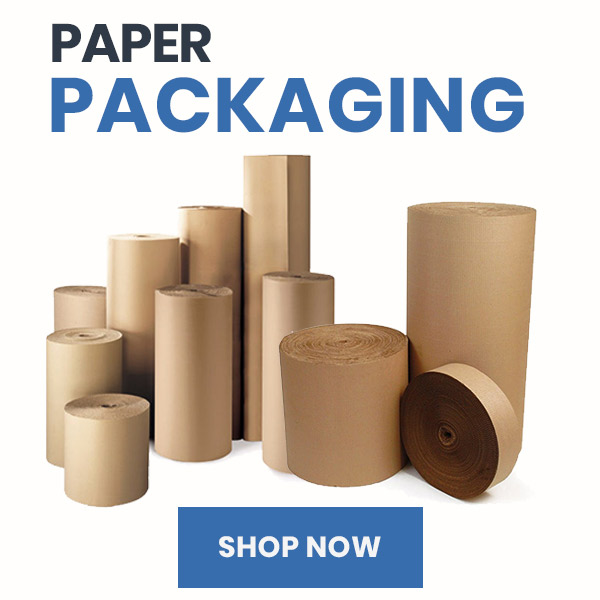
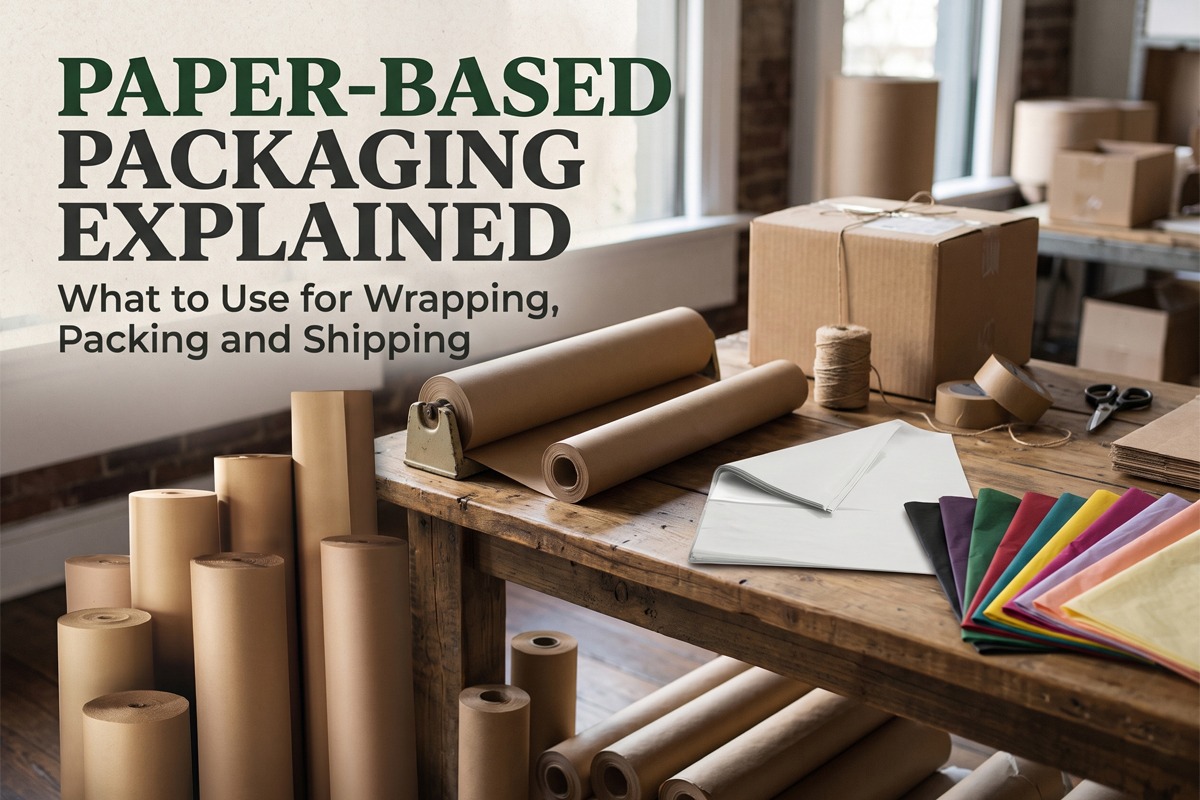
Our paper range includes pure ribbed kraft rolls, imitation kraft rolls, corrugated rolls, tissue paper, and newsprint offcuts, so you’ll find a suitable option whether you are wrapping, filling, or protecting.
Everyday Wrapping Paper
Brown parcel paper is the easiest way to wrap books, clothing and gifts. Imitation kraft rolls are available as a recycled option, and pure kraft rolls give you another choice.
- Suits books, clothing and gifts
- Easy to cut and fold by hand
- Takes handwriting and labels
- Works with kraft paper tape
Wrapping Individual Items
A good parcel wrap goes around each item before it goes in the box, keeping surfaces clean and preventing items from rubbing together. A corrugated roll adds extra padding when a single paper layer isn’t enough.
- Wrap each item separately
- Overlap the edges fully
- Add corrugated roll for edges
- Tape the wrap closed
Filling Gaps Inside the Box
Newspaper offcuts are a low-cost void fill. Scrunch them loosely around the item so it cannot shift when the box is shaken.
- Fill gaps around and above the item
- Wrap pale items first to avoid ink marks
- Shake the closed box to test movement
- Add more if the contents shift
| Product | Main Function | Best Application |
| Pure ribbed kraft roll | Wrapping | Gifts and general parcels |
| Imitation kraft roll | Wrapping and filling | Everyday parcels |
| Corrugated roll | Cushioning | Items needing wrap protection |
| Newsprint offcuts | Void fill | Gaps around items |
| Tissue paper | Presentation | Light, delicate items |
How Do You Choose the Right Paper for Your Parcel?
Wrapping Paper Versus Filler
Wrapping paper protects an item’s surface, while filler controls movement. If a product needs to look clean on arrival, wrap it in brown paper first, then add offcuts around it.
- Brown paper for clean, wrapped surfaces
- Offcuts for gaps and spacing
- Both together for loose items
- Neither alone for heavy goods
Limits of Paper Filler
Paper filler has its limits. Delicate or heavy goods can crush it flat in transit, so they need cushioning such as corrugated roll or bubble wrap, plus a sturdy box.
- Glass and ceramics need cushioning
- Heavy items need a double wall box
- Loose paper can compress in transit
- Check nothing moves when shaken
Wrapping Paper Versus Carrier Bags
Kraft paper bags suit hand-carried retail orders, while wrapping paper works better for posted parcels because you can cut it to fit each item.
- Bags suit shop counters and gifts
- Wrapping paper suits posted parcels
- Wrapping fits odd shapes
- Posted goods still need a box or mailer
Checks Before Ordering
A few quick checks save you from ordering the wrong paper. At Packaging Now, we sell many products in bulk packs, so it pays to choose the right option the first time.
- Weight of the product
- Fragility of the item
- Length of the journey
- Roll width and size needed
| Industry | Main Risk | Suitable Paper |
| Fashion | Creasing and scuffs | Tissue or kraft wrap |
| Books | Corner damage | Kraft wrap and a sturdy box |
| Homeware | Breakage | Corrugated roll plus offcuts |
| Food gifts | Movement in the box | Offcuts and kraft wrap |
FAQs
Which paper is best for wrapping fragile items?
Wrap each item in corrugated roll or several layers of kraft paper, then add filler around it and use a sturdy box. Heavy fragile items need a double wall box.
Is paper packaging recyclable?
Clean paper is widely accepted through UK household recycling schemes, but collection rules vary, so check with your local council.
Where can I buy paper packaging from Packaging Now?
You can order online from our paper packaging category, or use Click & Collect from our Birmingham site.
Can corrugated roll replace bubble wrap?
For many items, yes. Heavier or very fragile goods may still need bubble wrap.
How quickly will my order be dispatched?
We dispatch orders placed before 2:30pm, Monday to Friday, the same day. Standard delivery is free on orders over £200 to UK mainland addresses.


